




Chapter 9: The welfare society
This chapter explains the Swedish welfare system, which is designed to provide all residents with fundamental economic and social security. It outlines how welfare is funded through taxes and explains the different responsibilities held by the state, regions, and municipalities.
Taxes Fund Sweden’s Welfare
The core idea of a welfare society is that all people should be able to live secure lives, ensuring they have access to healthcare, education, and financial support if they become sick or unemployed.
To provide these extensive services, the state, regions, and municipalities need substantial budgets, which are primarily funded through taxes. Sharing this financial responsibility means vital services like schools, hospitals, and roads can be funded collectively. The more people who work and the more goods and services that are bought and sold, the more tax revenue is generated to sustain the welfare system. While some welfare services are operated by private companies, they are still paid for using public tax money.
Examples of common taxes include:
Income Tax (Inkomstskatt): A portion of a person’s salary is paid to the state, region, and municipality as tax.
Value Added Tax / VAT (Moms): A consumption tax added to the price when you buy goods and services.
Employer Contributions (Arbetsgivaravgifter): Fees that employers must pay to the state for each employee, on top of their regular salary. This money helps fund the public pension and health insurance systems.
The Division of Responsibilities
Welfare duties are divided among the three levels of government to ensure all citizens feel secure regardless of their age or life situation.
1. State-Funded Welfare The national state is responsible for major financial safety nets. It funds pensions, health insurance, parental insurance, unemployment insurance, student financial aid, and child allowances. Additionally, the state finances higher education and research at universities and colleges.
2. The Regions’ Responsibility:
Healthcare Sweden’s 21 regions collect their own taxes from residents, and their primary duty is to provide health and medical care for everyone. To do this, they fund and operate hospitals and local health centers. While most healthcare is publicly run, there are private healthcare providers that are also financed by regional tax funds. Healthcare is generally categorized into:
Primary Care: Local health centers (vårdcentraler), as well as maternity and child health clinics.
Hospital Care: Emergency hospitals, county hospitals, and university hospitals where surgeries and advanced treatments take place.
Other Care: Psychiatric care, rehabilitation, and dental care.
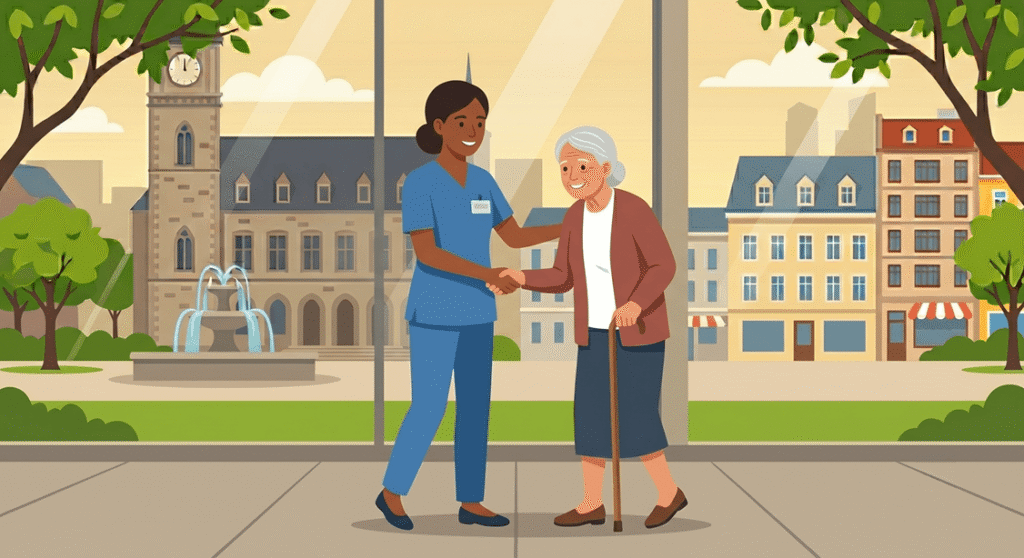
3. The Municipalities’ Extensive Responsibilities
Municipalities determine their own local tax rates and decide how those funds are used. They are responsible for making sure residents have access to schools and that the elderly or sick receive help when they cannot manage daily life on their own.
Key municipally managed welfare services include:
Childcare: Operating preschools and after-school recreation centers (fritidshem).
Schools and Education: Every municipality provides compulsory schooling for children aged 6 to 16. They also manage upper secondary schools (high schools) and municipal adult education.
Elderly Care: Municipalities are legally required to offer support to the elderly. This includes practical home assistance (like cleaning, cooking, shopping, and personal hygiene) so older individuals can continue living in their own homes. If living at home is no longer possible, they can move into specially adapted housing for the elderly.
Social Services (Socialtjänsten): Every municipality has a social services department that protects and supports those in need. This can include financial assistance for families struggling with money, housing help for the homeless, addiction treatment, and protection for individuals facing threats or violence. They also provide support for people with disabilities and offer guidance on finding work or studying.