
Chapter 10: Sweden’s modern history
This chapter explores how Sweden transformed from an impoverished agricultural nation into a highly advanced, high-tech welfare society over the span of 200 years. This journey has been shaped by major reforms, social conflicts, and critical political choices.
From an Agricultural Society to an Industrial Nation
Two centuries ago, Sweden was a deeply poor farming country. Almost the entire population lived in rural areas, relying on agriculture and livestock, and cities were very small.
During the 1800s, this began to change. As new machines were invented, Sweden slowly industrialized. Between 1800 and 1900, the population doubled from 2.5 million to 5 million people, largely due to better farming methods that yielded more food and medical advancements that reduced child mortality. However, poverty remained widespread, and jobs were scarce. Because of this hardship, over one million Swedes emigrated to the United States between 1850 and 1920 to seek a better life.
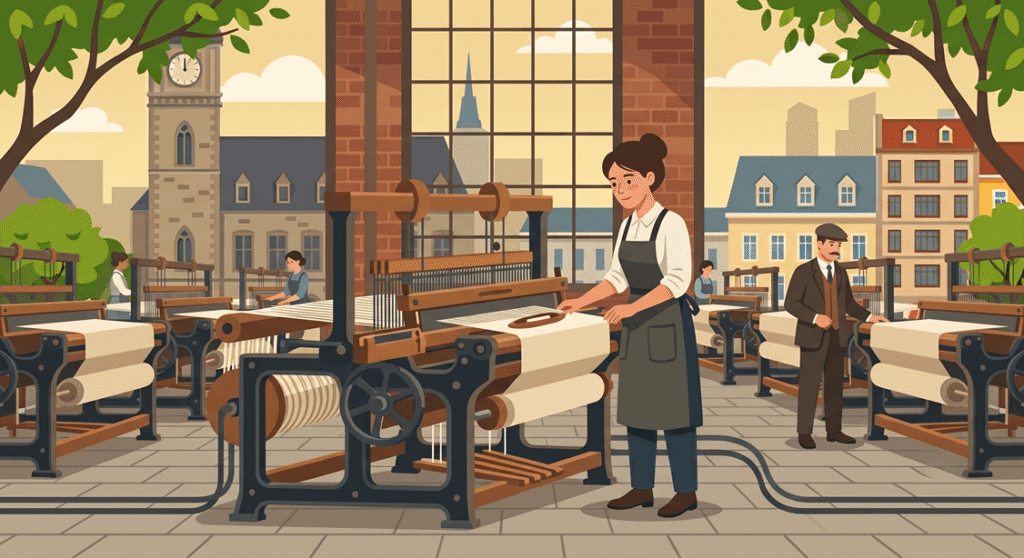
In the mid-1800s, the first major industries emerged, starting with sawmills (producing timber) and steel manufacturing. Eventually, more factories were built for clothing, shoes, and engineering, leading to a massive wave of urbanization as people moved to cities for factory work.
The Path to Democracy
Historically, power in Sweden was held tightly by the King, the nobility, the church, wealthy merchants, and land-owning farmers. As the country modernized in the 1800s, citizens began demanding political change.
In 1809, a new constitution limited the King’s power. In 1865, another reform stripped the nobility and the church of their historical political dominance and expanded voting rights. However, democracy was still far away: women could not vote, and only men with a certain level of income or wealth were allowed to vote (with the wealthiest men getting multiple votes).
The Popular Movements (Folkrörelserna)
Sweden’s transition to a true democracy was heavily driven by “popular movements” grassroots organizations where ordinary people united around shared interests to demand rights like an eight-hour workday, voting rights, and freedom of religion. Hundreds of thousands of people joined these groups, creating their own libraries, study circles, and holding public meetings. The four largest movements were the labor movement, the free church movement, the women’s rights movement, and the temperance (anti-alcohol) movement.
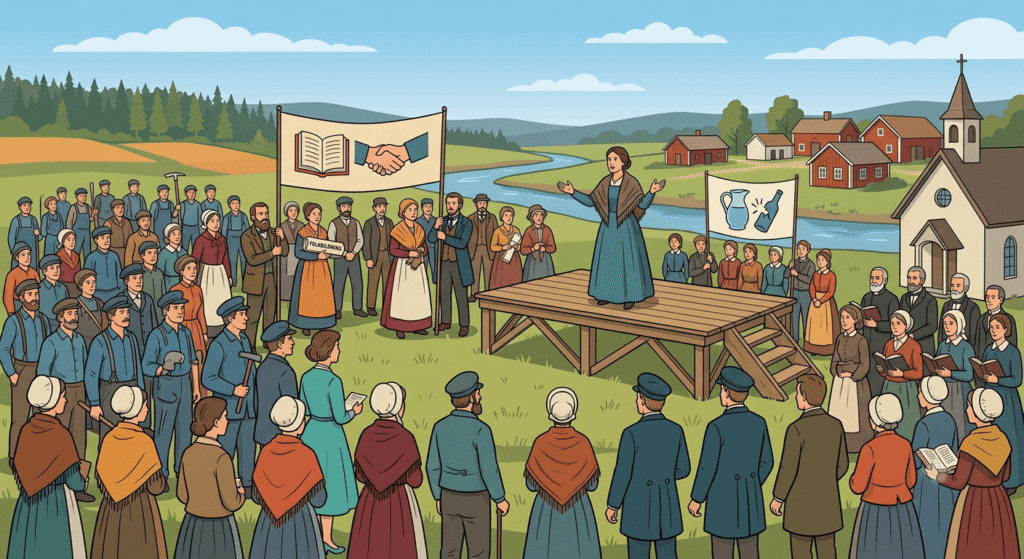
They used legal methods to push for change, such as street demonstrations, writing articles, and organizing petitions.
In 1909, the law was changed to give almost all men the right to vote. After years of intense campaigning, particularly by the women’s movement, parliament finally approved universal suffrage in 1918.
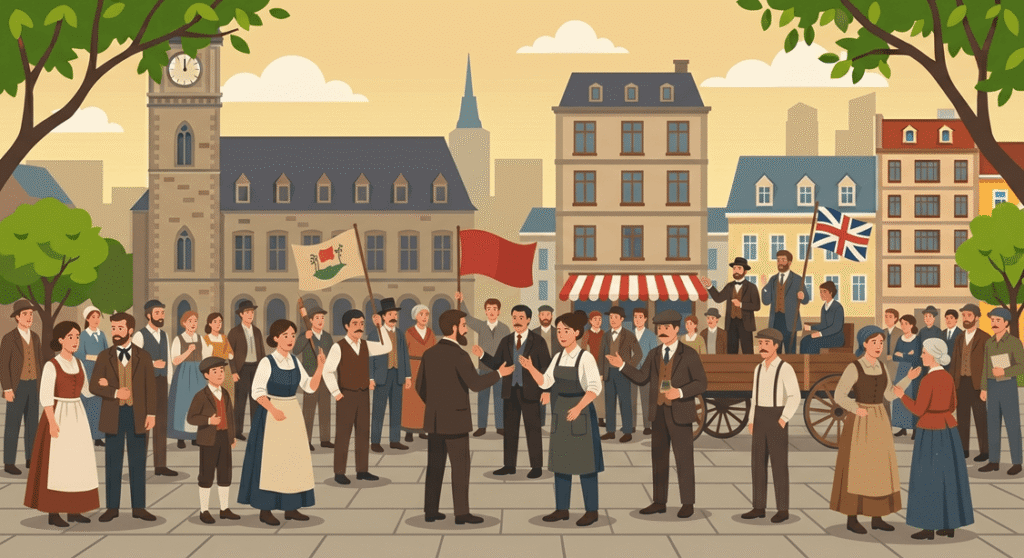
In 1921, Sweden held its first parliamentary election where both men and women were allowed to vote and women could be elected to parliament, marking the official birth of Swedish democracy.
(Note: During World War I from 1914–1918, Sweden remained neutral. However, the country still suffered from severe food and goods shortages, which sparked protests).
Modernization and “The People’s Home” (Folkhemmet)
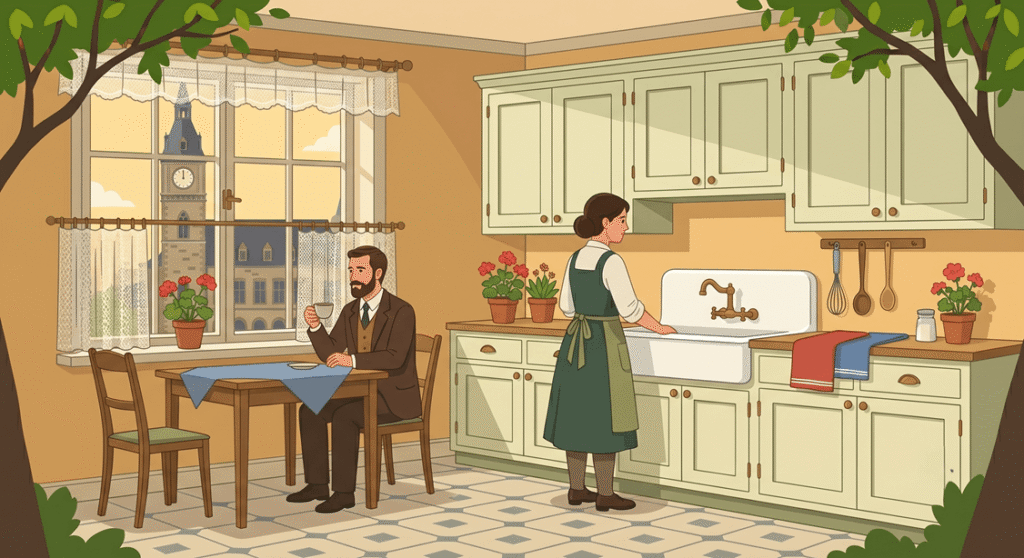
During the 1920s and 1930s, society modernized rapidly. Electricity became more common, and housing conditions slowly began to improve, with modern kitchens and bathrooms becoming more prevalent.
Despite this progress, the era was marked by severe conflicts between workers and employers over wages and conditions. In 1931, the military shot and killed several protesting workers in a town called Ådalen, an event that deeply shocked the nation.
To prevent further violence, trade unions and employer organizations met in 1938 and signed the Saltsjöbaden Agreement (Saltsjöbadsavtalet). This historic peace treaty laid the foundation for the “Swedish Model” a system where unions and employers negotiate workplace rules and salaries themselves, rather than relying on politicians.
In 1928, the leader of the Social Democrats, Per Albin Hansson, introduced the concept of the “People’s Home” (Folkhemmet). His vision was to build a society that acted like a supportive family, providing security and community for everyone, regardless of their background, while eliminating extreme class divides.
The Dark Side of Modernization
The 1930s also had a dark side. “Race biology” and racism were prevalent, leading to discrimination against minorities like the Sami, Tornedalians, Roma, and Jews. Strict laws made it difficult for groups like Jews and Roma to immigrate to Sweden. Additionally, people who did not “fit into” society such as those with physical or mental disabilities were frequently locked away in institutions, sometimes for life. Sweden has only recently begun to fully acknowledge and make amends for this dark history.
World War II
When World War II broke out (1939–1945), Sweden declared itself neutral once again. To avoid being dragged into the conflict, the Swedish government controversially allowed German troops to travel via Swedish railways to occupied Norway and Finland.
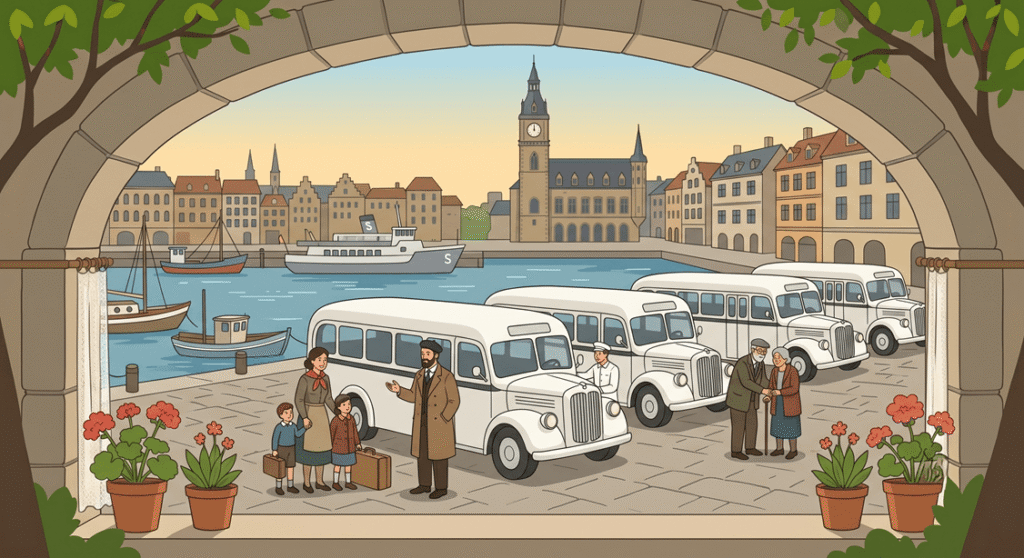
Initially, Sweden maintained strict immigration policies that made it difficult for Jewish refugees to enter the country. However, as the Holocaust intensified, Sweden’s stance shifted, and the country actively helped rescue Jews. Around 7,000 Danish Jews were smuggled to safety in Sweden, Swedish diplomat Raoul Wallenberg issued protective passports to save Jews in Hungary, and at the end of the war, the Swedish Red Cross used “White Buses” to rescue thousands of survivors from German concentration camps.
The Record Years (Rekordåren)
Following WWII, Sweden experienced a massive economic boom that lasted from 1945 to 1976. Unemployment was extremely low, industries thrived, and the Social Democrats mostly governed the country uninterrupted. Because of the strong economy, the state was able to rapidly build out the modern welfare society.
Workers secured the right to a 40-hour work week (with Saturdays off) and five weeks of paid vacation. Higher wages allowed ordinary people to buy cars and travel abroad for holidays. The state expanded healthcare, elderly care, child allowances, and pensions.
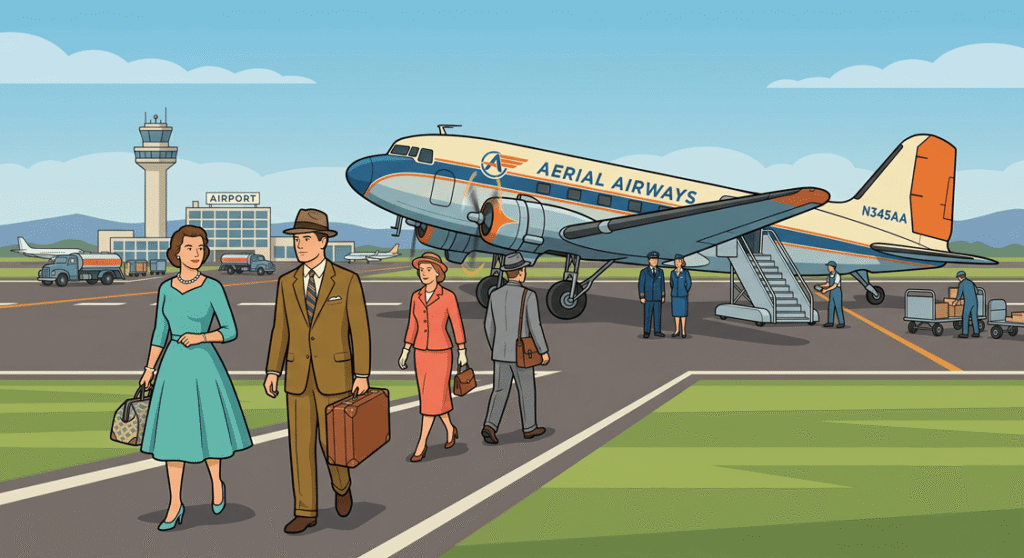
To fill the demand for factory workers, Sweden transitioned from an emigration country to an immigration country, welcoming guest workers from Finland, Greece, Yugoslavia, and Turkey. The rapid influx of people to the cities caused a housing shortage, which the government solved by launching the “Million Programme” (Miljonprogrammet) in the 1960s, successfully building one million new modern homes in the suburbs over ten years.
Culturally, the 1960s brought the introduction of television, youth protests for peace and the environment, and the “Du-reform” a social shift where Swedes stopped using formal titles and began addressing everyone informally as “du” (you), reflecting a more egalitarian society.
The Information Society and Globalization
In the mid-1970s, the industrial era faced a severe crisis. Increased global competition forced many large Swedish factories to close, and unemployment rose. This turmoil led to the election of a non-socialist government in 1976, marking a shift to alternating political leadership in the following decades.
Sweden transitioned into an information and knowledge society. Universities expanded significantly as the high-tech economy required a more educated workforce and lifelong learning.
During the 1990s, immigration surged again, primarily consisting of refugees fleeing wars and dictatorships. As the population diversified, issues of segregation and xenophobia increased, making integration a central political debate. Concurrently, there was a stronger focus on individual rights, giving citizens more freedom to choose their own schools and healthcare providers. Minority rights were strengthened, and acceptance of LGBTQI individuals grew significantly.
The Digital Revolution
Since the 1990s, the digital revolution driven by computers, the internet, smartphones, and recently artificial intelligence (AI) has fundamentally transformed how people work, study, and communicate. Today, Sweden is a highly globalized, high-tech information society.