



Chapter 5: Law and justice
This chapter covers the laws that everyone in Sweden must follow to ensure that society functions properly and its people are protected. It also explains how the justice system operates, how crimes are investigated, and the fundamental principle of legal security (rättssäkerhet).
The Fundamental Laws (Grundlagarna)
Sweden’s constitution consists of four fundamental laws. These laws are much harder to change than regular laws to ensure the stability of the country’s democracy.
The Instrument of Government (Regeringsformen):
This law states that all public power derives from the people. It guarantees citizens’ basic human rights and outlines the exact roles of the parliament, the government, and public authorities.
The Freedom of the Press Act (Tryckfrihetsförordningen):
This guarantees the right to freely publish newspapers, magazines, and books without government censorship.
The Fundamental Law on Freedom of Expression (Yttrandefrihetsgrundlagen):
This protects the right to freely express thoughts and opinions on the radio, television, and the internet, as well as the right to protest and form associations. However, freedom of expression has limits: it is illegal to commit slander, engage in hate speech against specific groups (hets mot folkgrupp), or reveal national security secrets.
The Act of Succession (Successionsordningen):
This law dictates the specific rules for who will inherit the Swedish throne and become the next monarch.
The Right of Public Access (Allemansrätten)
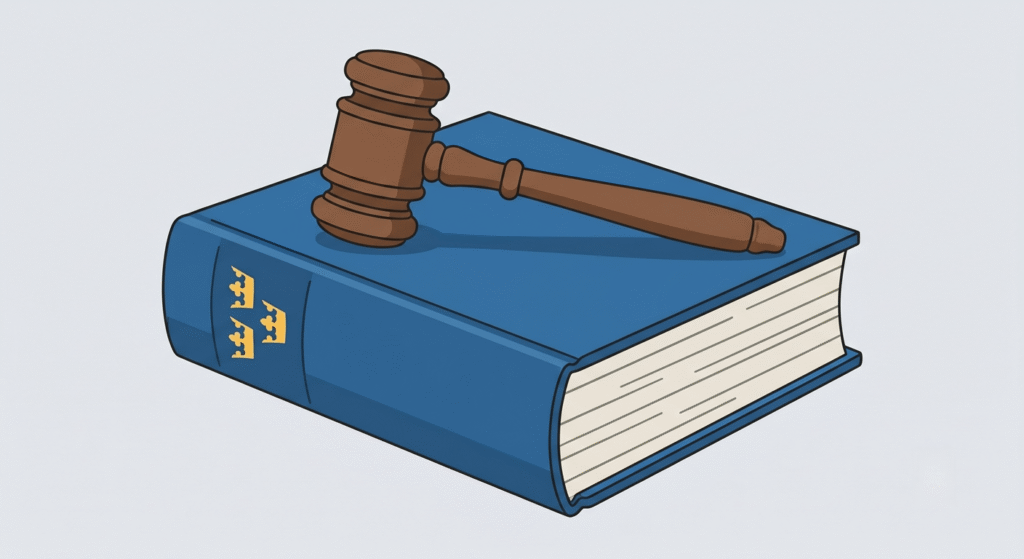
Protected directly by the Instrument of Government, the Right of Public Access is a unique and ancient Swedish tradition. It allows everyone to roam freely in nature, regardless of who owns the land. People are allowed to hike, cycle, paddle, set up a tent, and pick wild berries and mushrooms.
However, this freedom requires great responsibility. You are strictly forbidden from damaging nature, littering, walking on a farmer’s cultivated crops, or trespassing in someone’s private garden. Additionally, certain rare plant species are protected by law and cannot be picked.
The Justice System and the Rule of Law
The Swedish justice system is made up of several key authorities:
The Police: Prevent, investigate, and combat crime.
The Prosecution Authority (Åklagarmyndigheten): Decides whether a criminal suspect should be taken to court.
The Courts (Domstolar): Examine evidence and decide on verdicts and sentences (such as fines or prison).
The Crime Victim Authority (Brottsoffermyndigheten): Provides support to people who have been subjected to crimes.
The Prison and Probation Service (Kriminalvården): Manages prisons and oversees individuals serving their sentences.
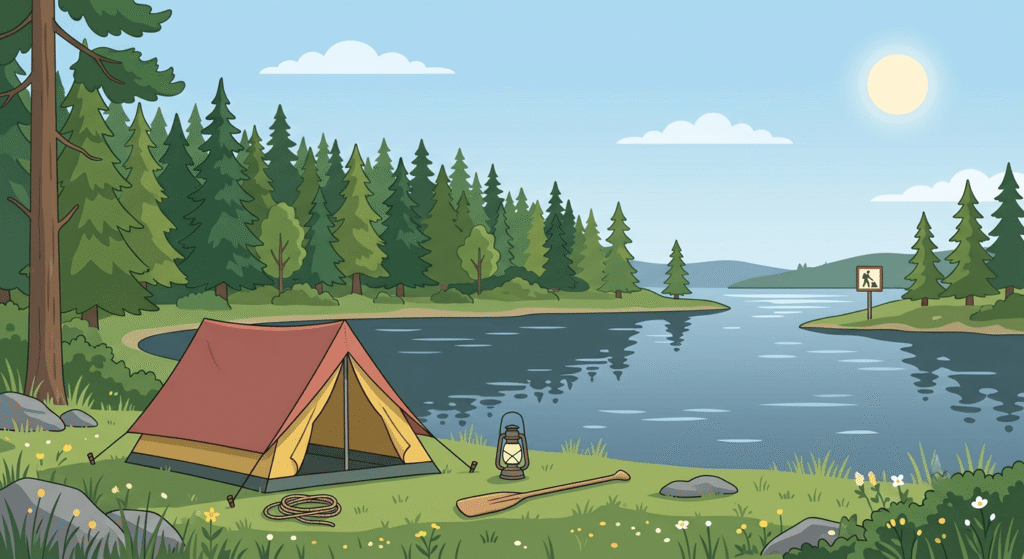
Legal Security (Rättssäkerhet) means that everyone is equal before the law. No one can be punished without a fair and thorough trial. The courts are entirely independent; neither the government nor the parliament can tell a judge how to rule. Legal security also guarantees the right to defend oneself with a lawyer and the right to appeal a court’s decision.
The Court System
Courts handle both criminal cases and civil disputes (such as child custody disagreements). An individual is always presumed innocent until a court formally convicts them. There are three levels in the general court system:
District Court (Tingsrätten): The first level where all trials begin.
Court of Appeal (Hovrätten): Reviews cases that have been appealed from the District Court.
Supreme Court (Högsta domstolen): The highest instance, which generally only reviews specific cases that will set an important legal precedent for the future.
Police and Criminal Investigations
When a crime is suspected, a strict legal process is followed:
Report (Polisanmälan): The victim reports the crime to the police.
Interrogation (Förhör): The police question individuals to gather facts.
Preliminary Investigation (Förundersökning): Police collect evidence and speak with witnesses.
Detention (Anhållan): If suspicions are strong, the police can arrest a person, and a prosecutor can order them held for up to 72 hours.
Remand (Häktning): If evidence mounts, a court can decide to keep the suspect locked up for a longer period while the investigation continues.
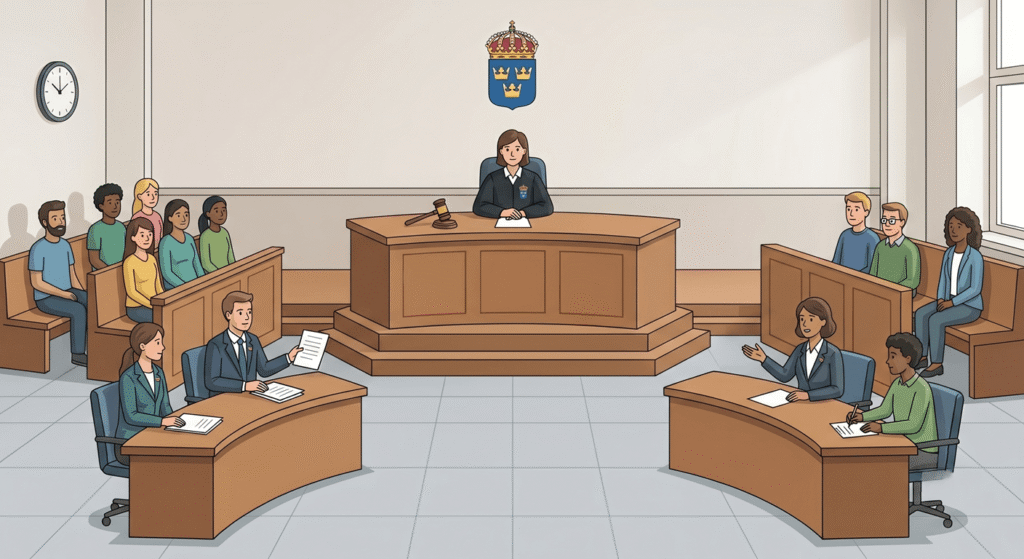
The Trial (Rättegång) If a prosecutor decides to press charges, a trial is held in court. The prosecutor presents evidence to prove guilt, while the defendant and their defense attorney argue against it. In the District Court, the professional judge is joined by lay judges (nämndemän). These lay judges are appointed by political parties to represent the general public and provide transparency in the legal process.
Age of Criminal Responsibility and Criminal Records
In Sweden, the age of criminal responsibility (straffmyndighetsåldern) is 15 years old, meaning anyone 15 or older can be prosecuted and punished for a crime. (Note: In 2026, a government proposal was introduced to lower this age to 13 for serious crimes). If a child under the legal age commits a crime, the social services dictate the consequences.
Individuals convicted of serious offenses are entered into a criminal record (belastningsregister). Having a criminal record can make it significantly harder to get a job, obtain a driver’s license, or be granted Swedish citizenship.