



Chapter 4: Political elections and parties
This chapter covers political elections and the role of political parties. Parties have different visions for how the country should be governed and seek the public’s support to get their candidates elected to the parliament, regions, municipalities, or the EU.
Elections and Voting Rights
Elections for the national parliament (Riksdag), regional councils, and municipal councils take place every four years. Elections for the European Parliament are held every five years.
To vote, an individual must be at least 18 years old. However, the rules for who is allowed to vote depend on the specific election:
National Elections: Voting in the parliamentary election requires Swedish citizenship.
Regional and Municipal Elections: Swedish citizenship is not mandatory, but non-citizens must have been registered residents in Sweden for three consecutive years.
EU Elections: EU citizens can vote in the EU parliamentary elections in the country where they are currently registered residents.
Referendums Occasionally, advisory referendums (folkomröstningar) are held on specific issues at the national, regional, or local level. These are advisory, meaning politicians are not legally bound to follow the result. For example, in 2003, Sweden held a national referendum on adopting the Euro currency; the public voted ‘no,’ and Sweden kept the Swedish krona.
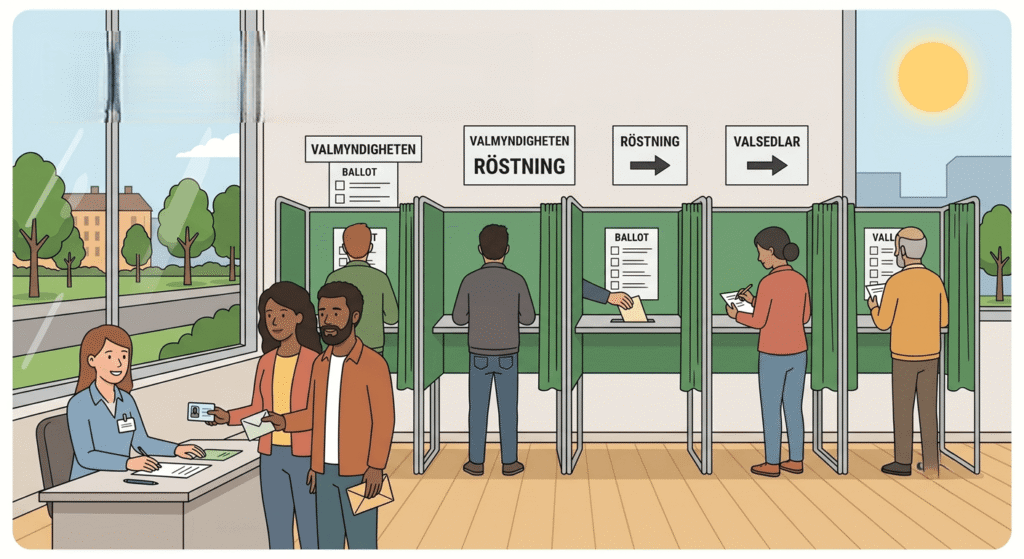
The Voting Process Eligible voters receive a voting card by mail detailing their specific polling station, though it is also possible to vote early at designated locations. Elections in Sweden are strictly secret. Voters make their choices behind a screen in the polling booth so no one else can see which party they selected.
Political Parties and Proportional Representation
Political parties gather people who share similar visions and solutions for how society should be run. Anyone can join a political party to help shape its policies or even start a brand-new party with others.
Sweden uses a system of proportional representation. This means a party receives a proportion of seats in the parliament or local councils that matches the percentage of votes they won (e.g., 20 percent of the votes equals 20 percent of the seats). Because of this system, parties often need to cooperate and form alliances to achieve a majority for their proposals.
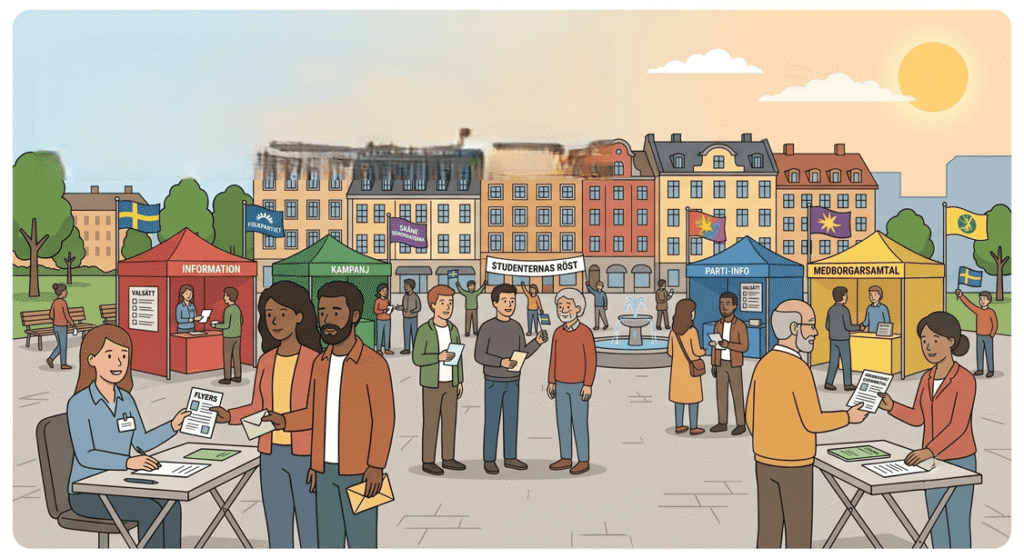
To prevent parliamentary instability caused by too many small factions, a party must secure at least four percent of the national vote to enter the Riksdag. Before elections, parties run active campaigns, participate in debates, and set up booths on streets and squares to convince voters.
Parties in the Riksdag
There are currently eight political parties represented in the Swedish Riksdag (listed in alphabetical order):
Centerpartiet (C)
Kristdemokraterna (KD)
Liberalerna (L)
Miljöpartiet (MP)
Moderaterna (M)
Socialdemokraterna (S)
Sverigedemokraterna (SD)
Vänsterpartiet (V)
(Note: In regional and municipal elections, there are often local parties that only operate within that specific area and do not run for the national parliament).