



Chapter 13: Traditions and holidays
This chapter covers the most important holidays and traditions celebrated in Sweden. While many of these holidays originally stem from Christianity or ancient agricultural society, they are mostly celebrated today as cultural and social events to gather with friends and family.
Winter Holidays
Lucia: Celebrated on December 13th to bring light into the dark winter. Children and adults dress in long white gowns and form a procession, singing traditional songs. The person chosen to be Lucia wears a crown of glowing candles on their head, while others hold candles in their hands.
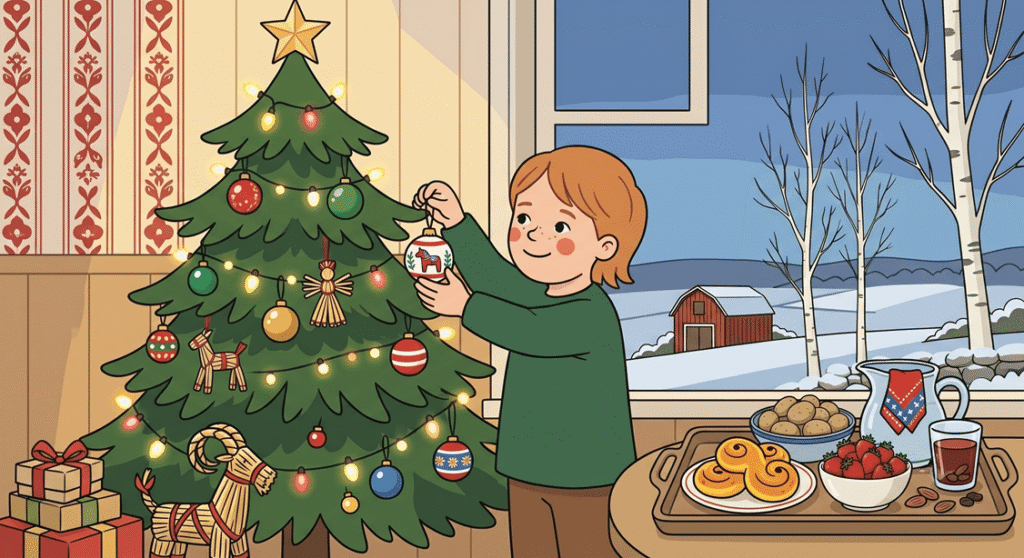
Christmas (Jul): The main celebration takes place on Christmas Eve (December 24th). Families typically gather for a large Christmas buffet (julbord) featuring dishes like Christmas ham, meatballs, sausages, and pickled herring. A deeply rooted modern tradition is watching a specific Donald Duck (Kalle Anka) broadcast on TV at 3:00 PM. Later in the evening, Santa Claus (Jultomten) usually arrives to distribute Christmas presents.
Spring Holidays
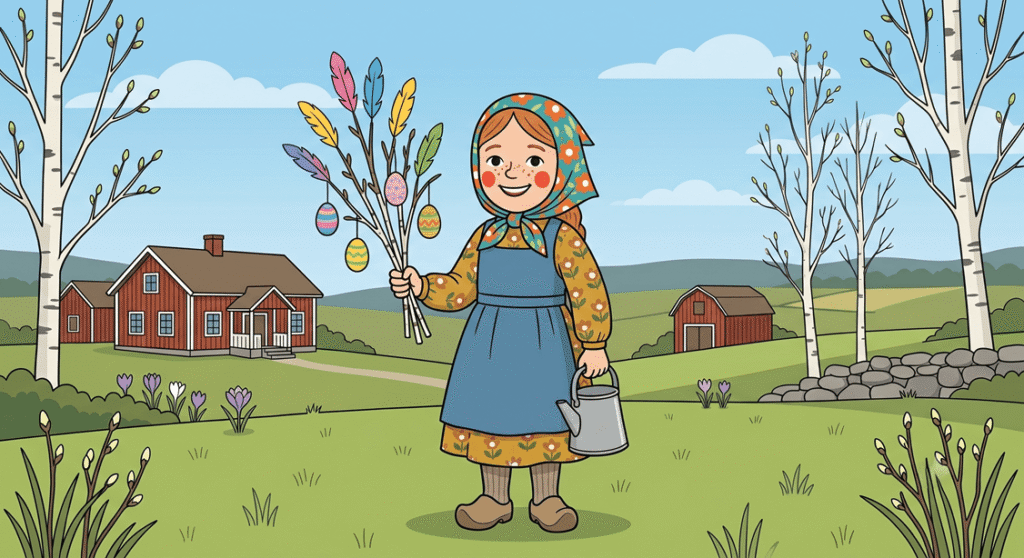
Easter (Påsk): Originally a Christian holiday marking the resurrection of Jesus, Easter is celebrated in the spring. Today, it is largely a secular family holiday. Children often dress up as “Easter witches” (påskkärringar) and go door-to-door in their neighborhoods asking for candy. Common foods include painted eggs, lamb, and pickled herring.
Walpurgis Night (Valborgsmässoafton): Celebrated on April 30th to welcome the arrival of spring. People gather in parks and public areas around large bonfires to listen to speeches and traditional spring choral singing.
May 1st (Första maj): The day after Walpurgis is International Workers’ Day. It is a public holiday in Sweden, and many people participate in political parades and demonstrations organized by the labor movement.
Summer Holidays
Sweden’s National Day (Sveriges nationaldag): Celebrated on June 6th. It marks the date in 1523 when Gustav Vasa was elected King, which laid the foundation for modern Sweden. It became an official public holiday in 2005. Many municipalities host special citizenship ceremonies on this day to welcome new Swedish citizens.
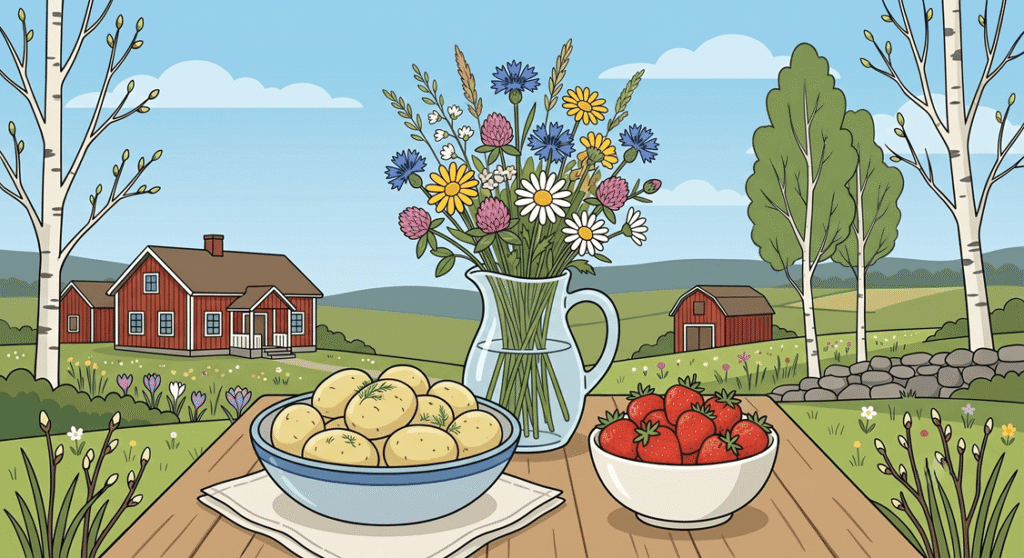
Midsummer (Midsommar): One of the most popular and iconic Swedish traditions, celebrated on a Friday in late June when the days are at their longest. People gather outdoors to decorate and raise a midsummer pole (midsommarstång). Children and adults dance in rings around the pole singing classic songs, most famously “The Little Frogs” (Små grodorna). The traditional midsummer meal consists of pickled herring, boiled new potatoes with dill, and fresh strawberries for dessert.
Late Summer and Autumn Holidays
Crayfish Parties (Kräftskivor): During August, it is a popular tradition to host outdoor evening parties where people eat boiled crayfish. Guests typically wear paper hats, decorate with paper lanterns, and sing short, traditional drinking songs (snapsvisor) before drinking spiced snaps. In northern Sweden, a similar late-summer tradition involves eating fermented Baltic herring (surströmming).
All Saints’ Day (Alla helgons dag): A weekend holiday in late October or early November. It is a quiet and reflective time when people visit cemeteries to light candles and place decorations on the graves of deceased relatives and friends, lighting up the dark autumn evenings.
A Diverse Calendar
Because Sweden is now a diverse and multi-religious society, the cultural calendar has expanded significantly. Depending on the community, many international and religious holidays are celebrated throughout the year. This includes Islamic holidays such as Ramadan and Eid, the Jewish holiday of Yom Kippur, the Hindu festival of Diwali, and the Kurdish/Persian New Year, Newroz.
Additionally, the Sami National Day is celebrated on February 6th to honor the history and culture of Sweden’s indigenous people.