Chapter 1: The Country of Sweden
This chapter covers Sweden’s geography, climate, and natural environment. It also explains how the country is divided administratively, where the population lives, the most important natural resources, and how Sweden approaches climate change and sustainability.
Geography, Climate, and Nature
Sweden is located in Northern Europe, specifically within the Nordic region. The furthest northern sections of the country extend past the Arctic Circle into the Arctic area. Geographically, it is a long country, measuring roughly 1,600 kilometers from Treriksröset in the very north down to Smygehuk in the extreme south.
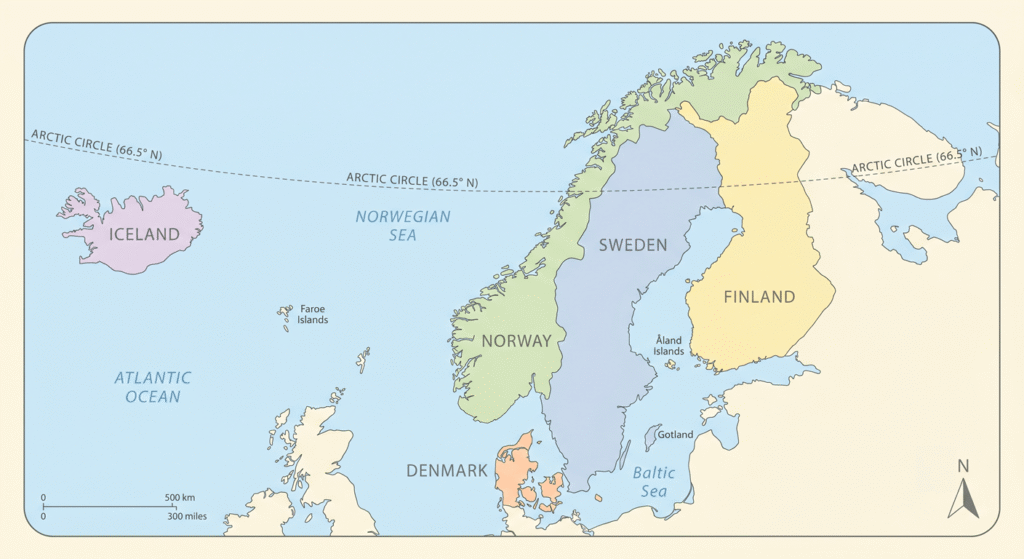
The country features an extensive coastline. To the east lies the Baltic Sea (Östersjön), which surrounds Sweden’s two largest islands, Öland and Gotland. On the western coast, the country borders the Skagerrak and Kattegat seas.
Despite being located so far north, Sweden experiences a relatively mild climate compared to other regions at the same latitude. This is because the Gulf Stream and the North Atlantic Current carry warm water from the Gulf of Mexico across the Atlantic Ocean. This warm water heats the air, and ocean winds then bring this milder, humid air over Sweden.
Sweden’s Natural Landscape
The modern Swedish landscape was primarily shaped during the Ice Age, roughly 10,000 years ago, when a layer of ice several kilometers thick covered the region. As this ice melted, it carved out the terrain, leaving behind cultivable plains, sprawling archipelagos, and numerous lakes. The melting ice also gave the Swedish mountains their current shape.
Mountains (Fjäll):
The Scandinavian Mountains (Skanderna), known locally as the “fjäll,” run along the border with Norway. Due to the harsh, windy, and cold climate, trees cannot grow at these altitudes. The terrain is mostly open, covered with rocks, grass, and low-lying vegetation. This mountain range is home to Kebnekaise, which is Sweden’s highest peak at approximately 2,000 meters tall.
Forests, Lakes, and Rivers:
Forests cover more than half of Sweden’s total land area. In the colder northern regions, coniferous trees like pine and spruce dominate, while the milder southern climate supports more deciduous (leafy) trees. The country is dotted with lakes, with Vänern, Vättern, and Mälaren being the three largest. Additionally, hundreds of rivers and streams flow through the country, with the largest rivers originating in the northern mountains and flowing down into the sea.
Archipelago (Skärgård):
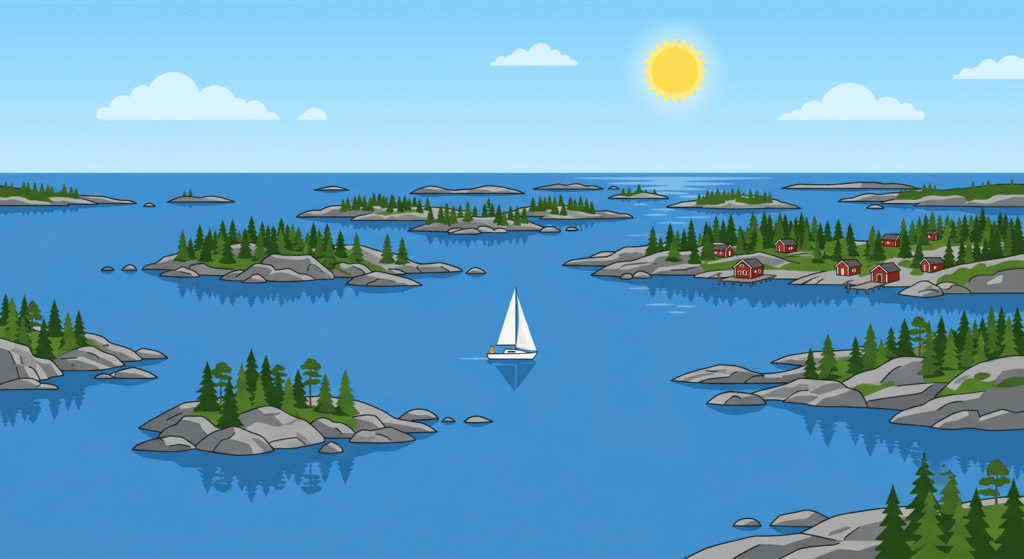
An archipelago is a coastal area featuring a dense collection of islands. Sweden has archipelagos along its northern coast, down the eastern coast to Småland, and on the western coast near Gothenburg and Bohuslän. With approximately 250,000 islands, Sweden has more islands than any other country in the world.
Administrative Divisions
Geographically, Sweden is broadly divided into three main regions:
Norrland: Located in the north, this is the largest region, making up more than half of Sweden’s total area.
Svealand: The central region of the country.
Götaland: The southernmost region of Sweden.
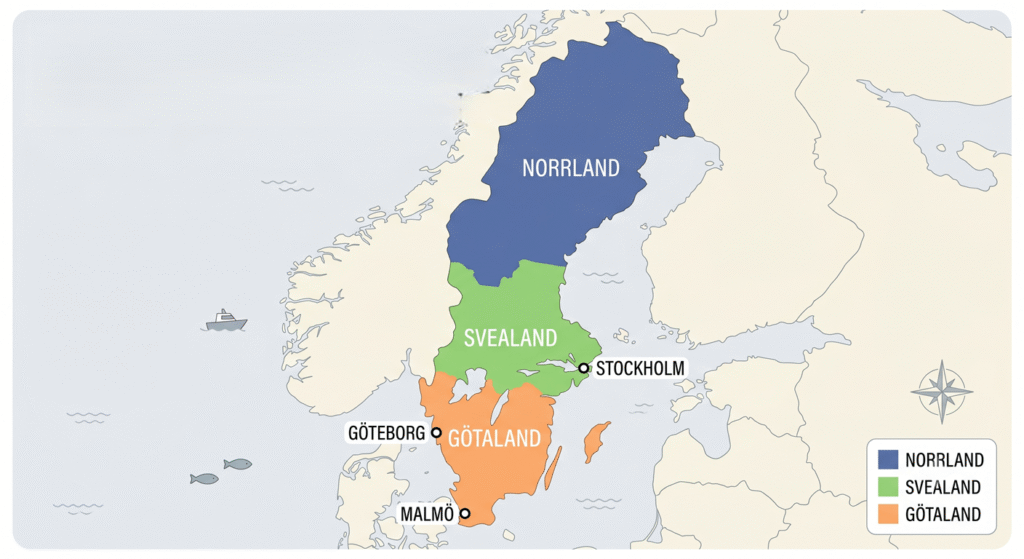
Historically, Sweden was also divided into 25 provinces (landskap). In the past, these provinces had their own laws, but today they hold no political or administrative power. However, they remain highly important for cultural identity, as many Swedes feel a strong connection to their home province. Today, the actual political and administrative division of Sweden consists of 21 counties (län) and 290 municipalities (kommuner).
Population
Sweden has a population of nearly 11 million people. The population is not evenly distributed; the vast majority of residents live in the southern half of the country and along the coasts. Approximately 85 percent of the population lives in urban areas. Around four million people live in or near Sweden’s three largest cities: Stockholm, Gothenburg, and Malmö.
Natural Resources
Sweden’s economy is heavily supported by its abundant natural resources, particularly iron ore, forests, water, and agricultural land.
Minerals and Iron Ore:
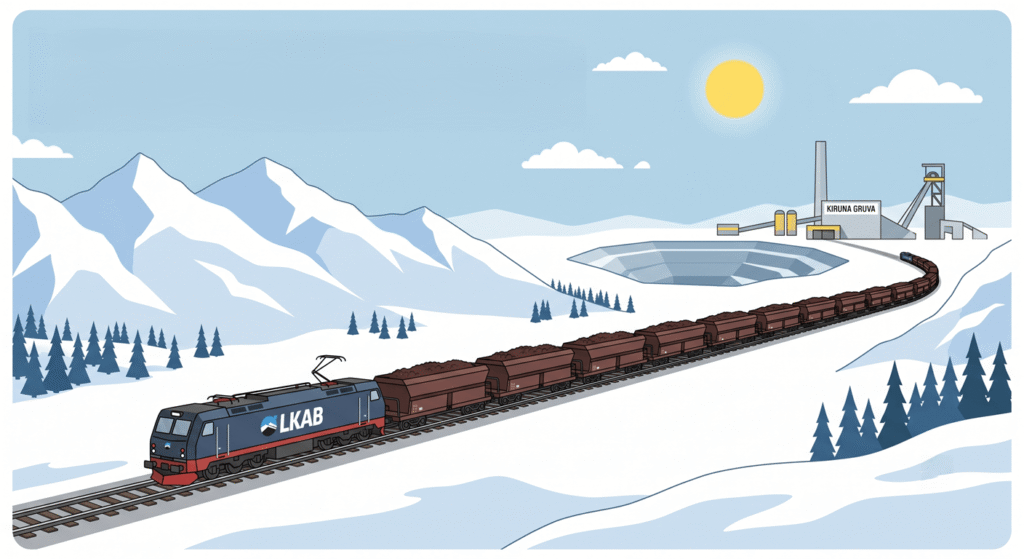
Metals such as gold, lead, zinc, and copper are mined in Sweden. The largest mining operations are located in Norrbotten County (such as in Kiruna and Malmberget), where massive amounts of iron ore are extracted and transported by train. Iron and steel have historically been crucial to Sweden’s export economy.
Forests:
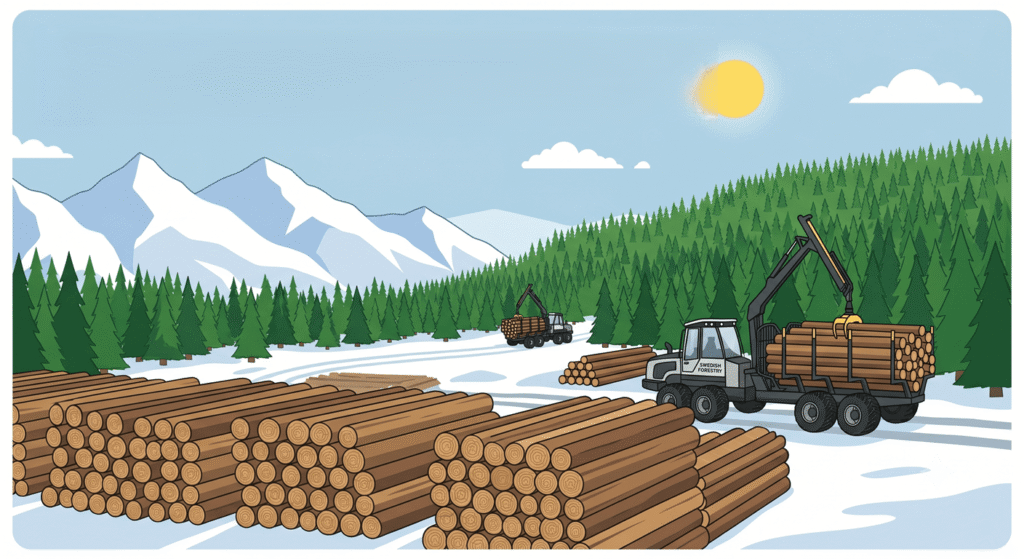
The forestry industry is one of the country’s most vital economic sectors. Swedish forests supply construction timber, paper pulp (cellulose), cardboard, and paper. Exporting these goods has been a foundation of Swedish trade for a long time.
Water and Farmland:
Sweden has excellent access to water, which is used for industry, agriculture, and drinking. The fast-flowing rivers are also a critical energy source, with hydropower accounting for a large portion of the country’s electricity production. Swedish agriculture is adapted to the climate, meaning the vast majority of farming takes place in the milder southern regions.
Sustainable Development and Climate Change
While the Earth’s climate has always fluctuated, international research panels from the UN show that the current global warming is happening at an unnaturally fast rate. This is primarily caused by human greenhouse gas emissions from agriculture, industry, and transportation. This temperature increase leads to melting polar ice, rising sea levels, and extreme weather events like heatwaves, severe droughts, and heavy rainfall. In Sweden, climate change is expected to increase the risk of floods from heavy rain, as well as droughts and forest fires during intense summer heatwaves.
Sweden has enacted a climate law with strict goals to reduce domestic emissions. The national target dictates that Sweden must reach net-zero greenhouse gas emissions by 2045, meaning the country will not emit more gases than nature can naturally absorb. Through international partnerships, Sweden also promotes the use of existing fossil-free technologies for solar, wind, and hydropower.
Sustainable development means using resources in a way that balances economic, environmental, and social factors so that future generations can also enjoy a good quality of life. While governments and businesses work to reduce emissions, individual citizens also play a role. People can support a sustainable lifestyle by:
Using public transportation, such as trains or buses.
Conserving electricity and heating.
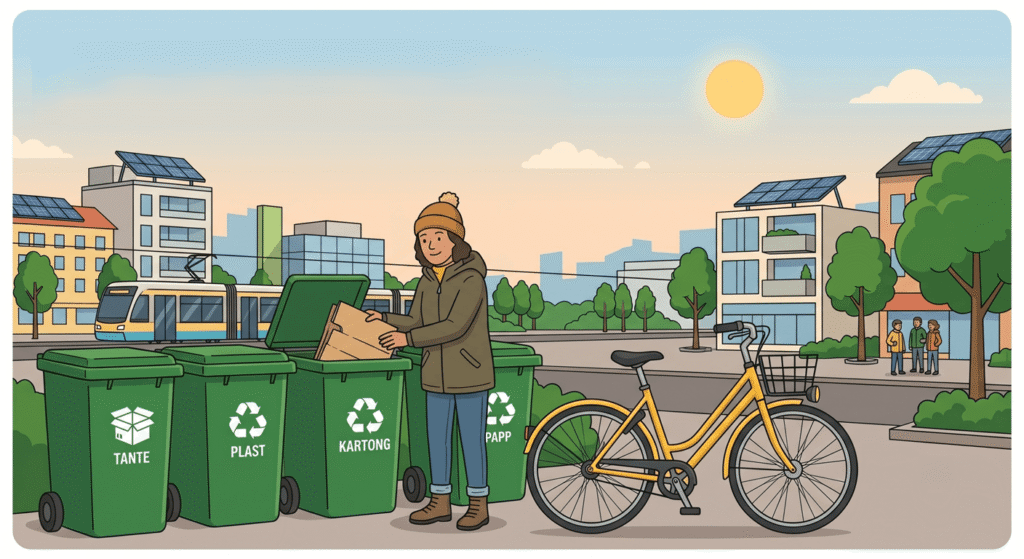
Sorting and recycling waste. Most residential areas have local recycling stations where residents can separate plastic, metal, glass, paper, and packaging.